A small taste of things to come:
adam@topos:~$ export SDK_DIR=/home/adam/.wine/drive_c/Program\ Files/Palm/SDK adam@topos:~$ export JARS_DIR=$SDK_DIR/share/jars adam@topos:~$ export IMAGES_DIR=$SDK_DIR/share/emulator/images adam@topos:~$ export JARS="emulator.jar ToolsUtil.jar jargs.jar novacom.jar" adam@topos:~$ for i in $JARS; do export CLASSPATH=$JARS_DIR/$i:$CLASSPATH; done adam@topos:~$ export MAIN_CLASS=com.palm.emulator.PalmEmulator adam@topos:~$ LD_LIBRARY_PATH=/usr/lib/jni/ java -cp "$CLASSPATH:/usr/lib/java/swt.jar:/usr/lib/java/swt3.2-gtk.jar" -Dpalm.command="$PALM_COMMAND" -Dpalm.emulator.images="$IMAGES_DIR" -agentlib:jdwp=transport=dt_socket,server=y,suspend=n $MAIN_CLASS Listening for transport dt_socket at address: 35912
With any luck, this one will work fine even through teferi is having so much trouble. That should be hilarious.
An IRC channel I consider my "home" channel is coming up on its tenth anniversary in a few months, and its founders have begun to reflect on how far we've really come in a decade. By far the biggest disappointment is that our beloved and snarky bot still runs a rickety hacked-up version of Kevin Lenzo's 1990s classic, Infobot.
We've looked into replacements in the past, but they always seemed like mere incremental improvements. They'd provide some degree of reliability and a slightly saner codebase, but they generally add little that appeals to us. Often they're written in Perl, like Infobot, which is something we're trying to move away from (for no reason beyond the fact that nobody in the channel is comfortable maintaining Perl code any more).
So when I finally found a bot that managed to have reasonable gains in terms of fun over Infobot, I leapt at the chance to put it through its paces despite being written in Perl. For various other reasons, it was not fit for purpose, although looking at the code led me to an inspiration.
The bot in question was written with POE, which appears to be Perl's answer to Twisted Python. POE gives you lots of library functions and objects that allow you to do things asynchronously by firing off events and registering callbacks for when something finishes. This is somewhat important, so that you don't say "Bot, do this five-minute thing" and have it fall off the network because it hadn't returned to the protocol code for five minutes.
But the way this bot was written was done in a very hasty JFDI sort of scripting style. I'm told that the real marvel was how quickly it was brought up and running, and I don't think it's fair to judge the authors based solely on this work. However, there was something of a common antipattern throughout the command recognition code:
if ($msg =~ GREATBIGHOARYREGEX) {
...
} else if ($msg =~ ANOTHERCRAZYREGEX) {
...
While tracing through a printout of this thing in an attempt to even figure out what its features were, I thought "Gosh, wouldn't it be great if this had a dispatch mechanism where you could associate regexes with functions in some kind of data structure, along with some kind of application data for context?" And of course that immediately reminded me of...
http://docs.djangoproject.com/en/dev/topics/http/urls/
I filed this little bit of inspiration away, and started worrying about how I'd go about cloning this system. I'd use Twisted Python, of course, but the asynchronous database library is on the same level as POE's, and I prefer a good ORM. Man, wouldn't it be great if my bot could use the Django ORM?
Of course, the Django ORM isn't built with a callback-based API, so while your code does a query that's all your program can do. This prompted me to wonder why that doesn't become a problem for Django Web apps. Surely they receive hundreds or thousands of requests per second, but concurrency never becomes a problem that exposes itself to the app programmer.
The answer is that while Django does not have any support for asynchronous programming, the very model in which it operates assumes that it's being called from a Web server such as apache. Apache has its own forking or threading model that it uses to handle lots of requests simultaneously, and the CGI or WSGI interfaces use a well-defined interface for passing connection information into a program and getting a response back out.
One morning on the Underground, I began to reason that what I needed was a sort of "IRC Bot Apache" that would handle incoming IRC events of various sorts (PRIVMSG, ACTION, etc.), and then pass them along with some connection information to my django code. I'd dispatch these messages through the regex-based patterns() system, then call view code that uses ORM objects to perform queries.
The obvious choice for implementing something like this is Twisted Python, which shows its age but remains the de facto Python library for coding state machines. I'm only occasionally familiar with the system (and the documentation is filled with distracting Java-esque Software Engineering babble for some bizarre reason), but I was able to localize the actual Twisted-using code to one function, which at the very least makes it simple to hand off to experts to tell me if I'm doing anything stupid.
Digging through twisted documentation I found their example LogBot and based it loosely on that pattern, subclassing irc.IRCClient and replacing the privmsg method along the following lines:
from twisted.words.protocols import irc
from twisted.internet import defer, threads
from django.core import urlresolvers
from django.conf import settings
class DjangoBot(irc.IRCClient):
@defer.inlineCallbacks
def privmsg(self, user, channel, msg):
resolver = urlresolvers.get_resolver('.'.join(
(settings.ROOT_MSGCONF, 'privmsg')))
request = dict(user=user, channel=channel, msg=msg,
settings=settings)
callback, args, kwargs = resolver.resolve('/' + request['msg'])
response = yield threads.deferToThread(callback, request,
*args, **kwargs)
defer.returnValue(self.notice(response.recipient,
response.data.encode('UTF-8')))
Let me go through that line by line:
@defer.inlineCallbacks def privmsg(self, user, channel, msg):
The inlineCallbacks decorator essentially catches any yield of a Twisted deferred object and schedules the next delve into the generator using standard Twisted deferred-execution mechanisms. So now yield really behaves like a scheduler yield, and you can let some more critical IRC-parsing code run between your own calls.
Next we build a Django urlresolver object so we can dispatch regexes to handler functions, using some Django settings info to determine path info:
from django.core import urlresolvers
from django.conf import settings
resolver = urlresolvers.get_resolver('.'.join(
(settings.ROOT_MSGCONF, 'privmsg')))
Then we build a request dictionary. In normal Django this would be an HttpRequest object, containing all sorts of information about the web server and the remote client and the HTTP request itself. Since this is a quick-and-dirty example, I've reduced this to a dict for simplicity. I also passed in the settings namespace just to be lazy (so I can keep things like nickname in there):
request = dict(user=user, channel=channel, msg=msg, settings=settings)
Now we actually use our resolver to test the incoming message against all our patterns in privmsg.py and return to us the appropriate function, along with all of the anonymous and named matches that were generated by the winning regular expression. Note that we have to prepend a / to our message to appease the URL-centric resolver:
callback, args, kwargs = resolver.resolve('/' + request['msg'])
Finally we get to the deferred execution magic! We have a function, a request object, and some arguments made from textual analysis of the message. We use the threads.deferToThread method to generate a deferred object that runs in a completely separate thread, and yield it up to our inlineCallbacks decorator to be scheduled:
response = yield threads.deferToThread(callback, request, *args,
**kwargs)
Our view function then runs in the background, taking as long as it likes while our bot concerns itself with answering PING replies and dispatching further events to the resolver.
We're confident that the Django code is reasonably thread-safe, as it has to handle concurrency under a variety of Web server models (such as apache's Worker MPM or a traditional Prefork model). Once the function returns a value, the thread closes and execution comes back to this method again, chucking the returned value into our response object.
We're almost done, but we still need to actually do something with this information! In ordinary HTTP Django this would be an HttpResponse object, containing all sorts of information on what template to render and what dictionary to pass in as an extra context namespace. This is a bit overkill for this example, so I've simplified it to another dict:
defer.returnValue(self.notice(response['recipient'],
response['data'].encode('UTF-8')))
The various RFCs for IRC all state rather loudly that automated bots are meant to speak using NOTICE but always ignore NOTICEs from other sources. This is meant to prevent feedback loops flooding a channel. Also note that since this was the final statement of my inlineCallbacks function, I called the defer.returnValue to spit back the result of the notice call. I'm not convinced that it was at all necessary, but I believe it's harmless boilerplate in the worst case.
My current version is obviously not exactly like this. I've been doing some rather wild and thrashing testing and debugging, and there's some mess and refactorings. The above is intended as a demonstration of the technology only while I do my explorations in the yardbird bazaar tree.
For a start, my current version applies an errback function to log exceptions in the view function thread, and I've refactored the above code into a separate function that both the ACTION and PRIVMSG functions can use. The principle is still the same, though.
Because Django is named after Django Reinhardt, and was split from a CMS project named Ellington (as in, Duke), it's become traditional to name Django projects after Jazz greats. For example, there's a popular Django e-commerce system named Satchmo. I dug around and couldn't find any named after Charlie Parker, or his nickname 'Bird'. I just decided to play it safe and use the rarer long form "Yardbird".
My spazzy tree, complete with README.txt files for the apache indexing and a hackish approach at implementing some of the Infobot functionality is up at http://zork.net/~nick/yardbird/. It's also a bazaar tree, so you can just:
bzr branch http://zork.net/~nick/yardbird/
Right now I'm trying to figure out what I should really do for the IrcRequest and IrcResponse objects, and how to properly package all this up like a proper professional project.
Soz.
Over the past year or so I have been learning and enjoying Django, which is a large set of python modules that are impressively nice for creating dynamic Web sites. It's the latest generation in a set of tools that have been written to solve this very problem, going back all the way to the original CGI libraries of the mid-1990s.
You can get more details on the Django Web site, but the basic pieces you interact with are these:
Object-Relational Mapper: This saves you from having to type in COBOL-esque SQL queries and manually connect the results to the data structures in your code. Template Language: This saves you from having to type in the punctuation-heavy HTML or XHTML to render your pages, and lets you focus more on the content. URL Dispatcher: This saves you from having to build trees of scripts or put argument-based flow control spaghetti in your code, and lets you restructure the layout of your URLs in a nice clean manner. Form Handler: This ties the previous three together to safely simplify one of the more dangerous aspects of programming: input validation.
There are more subsystems (such as the libraries of HTTP handling functions available to you in your “view” code), but those four seem like the legs of the table to me.
As I've been working with this, I've run into a number of conversations on IRC that seem to go something like this:
me: I'm really enjoying Django! nerd: Django is a tinker toy! I prefer TurboGears or web.py! me: Well Django sure takes a whole lot of busywork out of Web development! nerd: Bah! It's a giant integrated ball of goo that you can't break out of! me: Really? I mean their motto is "Loosely Coupled, Tightly Integrated". And sure the pieces all know a lot about one another, but you can swap out one or more trivially. nerd: Bah! Huge all-singing all-dancing frameworks only help you in the beginning, and then they get in your way! me: Right, but like I said you can easily swap them out or work in the raw for the more critical pieces of your app. nerd: Bah! Django brings nothing to the table that hand-assembled collections of individual tools can't! me: Really? I find it wonderful to have all that coordination among the pieces. nerd: Django's ORM sucks and is too Django-specific! SQLAlchemy forever! Behold The Power!
Okay, so what can you do? After enough of these conversations, I had this sense that I was kind of using the My First Sony of Web development systems. And the Loosely Coupled, Tightly Integrated motto has been pointed out to have the effect that while you can swap a new ORM into your Django app, few people ever use the Django ORM in anything else.
Eventually it came time to do some work on a non-Web application and I needed a database. With all these conversations with Riot Nrrds like the above, I figured I'd save myself a lot of trouble by going straight to SQLAlchemy.
There's a reason we have these “Object-Relational Mapper” things, and it's because of a problem known as the Object-Relational Impedance Mismatch. Basically, the formal mathematical model for databases used to ensure that they stay intact follows a system of tables with rows and columns and references to other tables, while data structures in most programming languages we use today manipulate data in nested tree-like structures. It's rather like the difference between a spreadsheet and an XML document, or between a ledger and a family tree diagram.
For a long time people just suffered through it: building SQL queries in strings and shoving them over the wire to databases, then manually parsing the results and populating the local data structures, all the while hoping nothing got mistranslated in the process. But in the argument over why we keep relational databases around in this object-oriented day and age anyway, people noticed that there was a formal and automatic mapping you could perform between the two.
So fundamentally the ORM is there to allow you to manipulate all your data in one single format, save you the trouble of re-inventing the necessary mapping techniques between the two, and cut down the complexity of your code thereby reducing your exposure to bugs. It's a fantastic thing, since relational databases are still important for their speed and reliability, and every reasonably-expressive programming language since LISP (which is from the 1950s, after all!) has had an implicit bias toward hierarchical representation of data.
Having fiddled with Django's ORM, and looked into Ruby's ActiveRecord system and read a bit about the history of Java's Hibernate ORM, I decided to see what was so hot about all the other Python ORMs out there.
I quickly learned that my sample of three had been somewhat biased toward a particular state of mind: namely those who want the impedance mismatch to actually be solved for them. The majority of ORMs used by the Riot Nrrd set instead seem to be written by people who enjoy the power of SQL and demand lots of advanced SQL features. Nothing to actually make your job as a programmer easier ranks anywhere on their priority list. One of the high-end python ORMS even brags in its Features list about how it can't do schema generation!
The result of all this talking out of school was that I had a project using SQLAlchemy and it was a horrible bureaucratic mess. I had session object setup and tear-down all over, manual coupling between table objects and actual useful objects for some reason, and it barely worked at all. I was forking processes off that needed to do a bit of database work, and my transactions and sessions kept stepping on each other. Hell, even the simple single-process jobs were hard to get right!
I'm sure this is where the Riot Nrrd contingent would step in and scream about how incompetent I must be. Why, a truly skilled SQL craftsman would be able to foresee all the intricate concurrency and relational integrity performance-critical session collision transaction issues that would arise, and work around them!
Frustrated and eyeing a looming deadline warily, I decided to see if maybe I could just stick to what I knew and come up with a better solution. Hey, maybe I'd bite the bullet and set up the whole thing as a Web app inside the much-derided all-singing all-dancing framework (a term that to me typically refers to an unfinished project, rather than a useful set of libraries).
So in my searches, I discovered a rant from 2006 about how horrible it is that you can't just use pieces of Django outside of django itself. As I contemplated the problem, I scrolled down to an intriguing response by Django's James Bennett.
James Bennett is one of those hackers you wish there were more of on the Internet. He's knowledgeable and proficient while remaining reasonable and courteous. He reminds me of an old Jesuit brother I once knew who never seemed to open his mouth unless he was saying something that would help someone out.
Anyway, Bennett wrote an entry of his own on how to do standalone django scripts, and that was in 2007! In 2007, Django was still in version 0.96, and there was a lot of isolating of components to go before the 1.0 release. And damn if the settings.configure() trick isn't simple and straightforward!
So my script now begins with:
from django.conf import settings
settings.configure(DATABASE_ENGINE='postgresql_psycopg2',
DATABASE_NAME='dbname',
DATABASE_USER='username',
DATABASE_PASSWORD='password',
INSTALLED_APPS=('myapp',))
…and then my database code lives in myapp/models.py and is something like ⅓ the length of the corresponding SQLAlchemy horror. It also gains a little input validation magic from some application-level data types (such as “IP Address”) that assert constraints not present in the database itself.
Ah, but there comes a wrinkle! You just knew there'd be a wrinkle, didn't you? Remember how I was forking off asynchronous handler processes? So here's where that sinking feeling of inadequacy returned. I mean, Django's implicit session handling was causing me a headache, which sounds like precisely the sort of thing the Riot Nrrds were kvetching about!
Django's DB access model is very conservative: it won't chat with the database basically until the query you're building is at a stage where it needs information from the DB itself to proceed any further. It's a very lazy approach and I love it to bits. The session handling is all done behind the scenes, and any DB-bound “model” object will try to use a pre-existing connection if possible, but will open a new session if needed.
So I rolled up my sleeves and prepared to throw manual and bureaucratic session-management code all over my app, and ended up with the following:
from django.db import close_connection close_connection() pid = os.fork()
That's it! Two lines to just drop the current database connection before forking, and one of them is an import! Then the parent and the child each get a new session the next time they perform a query or update operation on any Django model object. I'm still picking my jaw up off the floor over how simple this was.
So I got to do a massive bit of coding with the delete key, and I can now be confident about the correctness of all my database code. Furthermore, I did it without dragging in any baggage from the rest of the Django set (unless you count the brief use of the django.conf.settings module, which is a fair point).
So where does all this hatred for Django come from in the Riot Nrrd set? I suspect it is partly a quick look at early (pre-0.96) versions that were still in a “we're working on separating our framework from the Ellington CMS” state, and largely a reaction against the horrible “type a bit of python code into this browser input box” model of early Zope releases. I think that Zope in the late 90s left a lot of programmers with a bad taste in their mouths.
But in the end none of the complaints about Django held up, and SQLAlchemy simply wasn't fit for purpose. I ended up feeling kind of cheated, like I'd lost a week because I listened to some uninformed Real Programmer posturing that did nothing but make trouble. It could have been that I just hit a bunch of DBAs who use Python occasionally instead of people like me who are Python programmers who occasionally need a database, but I know that's not really the case.
Right now my only complaint about Django is that the #django channel on Freenode contains an op by the nickname of Magus who is the absolute opposite of James Bennett. Every time Magus answers someone's question, he does so in the most condescending way possible. Someone noticed this and set up a twitter feed to log each time he uses “obvious” or “of course”, but in February he changed his nick to avoid it. I'm sure this guy is a useful contributor to Django, but answering even naïve questions like that is simply not helpful.
Absolutely years, been over the edge for yonks, been working me buns off for bands...
I've always been mad, I know I've been mad, like the most of us... Very hard to explain why you're mad, even if you're not mad...
Security experts always moan about how few people properly understand security and cryptography, and the smart ones point out that UI problems in security and crypto tools lead pretty directly to security problems. I'm convinced that the lion's share of these UI problems come from an insistance on clinging to mathematically correct metaphors that don't survive translation into everyday English.
The big example of this that I give out often is the terms used in public-key cryptography. Yes, it's true that both the public and private keys are "keys" in a mathematical sense. But one of the reasons I constantly see novices accidentally leaking private keys or otherwise confusing the two is that these names tell you nothing about their everyday purpose. In actuality, the private key is the only one that is in any sense a "key", and the public key is actually a lock.
If I want to give you an account on my system and I ask for you to use ssh keys, it's like I have a set of bicycle kennels that I am letting out for people to store their bikes in. If I decide that you should be allowed to have one, I simply ask for you to give me a lock that I can slip through the hasp on the front door and you obviously keep the key so that I never need to see it. Likewise if I give you a shell account on my system, you give me your ssh lock ("public key", to use the standard confusing terminology) which allows you to use your key (ssh private key) to enter.
That aside, one of the cleverest security access techniques to come out in recent years is OPIE, or One-time Passwords In Everything. It's basically designed so that you generate a new key each time you enter the system, like one of those constantly-changing password systems they use in spy movies. This has many of the advantages of the ssh public key system, but with the added convenience that you don't need to carry a two-kilobyte key file around with you. This convenience prevents a lot of clumsy workarounds for the key problem, which on average can be a benefit to security (if you allow long but easily remembered passphrases, for example, you avoid the problem of people keeping the short punctuation-laden passwords in their e-mail or doing something else equally dangerous).
So let's start with what the user sees when she logs into my system with the One-Time Password system. When you ssh to zork.net without an ssh key, you get a prompt such as the following:
otp-md5 73 fr8981 ext, Response:
This requires the user to use a password-generator program to generate the password. She runs the program, enters her secret passphrase and the 73 fr8981 part of the above challenge, and gets back a result like this:
KATE LAWS LESK ALOE AQUA DUMB
She then copies and pastes these six words into the ssh window, and is let in. The next time she logs in, Zork says:
otp-md5 72 fr8981 ext, Response:
and the generator gives her:
AT LYRA GEL AMOK NICK LESK
Now, it may sound inconvenient to require this password software on every system you want to connect from. If you're in an Internet cafe, for example, you don't want to have to download and install special programs. For this reason, I have set up the page at http://zork.net/ssh/ to have both a Java ssh client (on the right) and a JavaScript One-Time Password generator program (on the left). So almost any Web browser can be used to run this password generator on any machine.
This looks like it involves a lot of spooky scary hard-to-understand crypto math, but in actuality it's a super elegant and easy to understand system. So what follows is an attempt to explain the inner workings in plain English.
If you have access to a modern Unixy system (basically every major OS except for Windows, these days. Poor bastards at Microsoft are still behind the curve there), you'll see that there's a program called md5sum that's used to make "checksums" of any amount of data you like.
A checksum is basically just a statistical summary of characteristics of the data. They usually show up as a long string of hexadecimal numbers, which make a number so large that the number of possible combinations is enough to give one of these strings to every atom in the universe.
[nick@frotz(~)] md5sum /etc/motd 74d4639801fad57b90932584d1bd8646 /etc/motd [nick@frotz(~)] echo -n 'hello' | md5sum 5d41402abc4b2a76b9719d911017c592 - [nick@frotz(~)] echo -n 'hello, world' | md5sum e4d7f1b4ed2e42d15898f4b27b019da4 - [nick@frotz(~)] echo -n 'hello' | md5sum 5d41402abc4b2a76b9719d911017c592 -
This is partly useful because it means that if you have a huge file and I have what I think is the same huge file, we can each run md5sum on it and compare the 32-character checksum string instead of comparing all umpteen gigaboobles of data. In fact, most unix nerds use a program called "rsync" instead of ftp or scp, which checksums pieces of each file to send only chunks that are different. It's very fast, and if there's an error you can just restart and it'll quickly find where it left off. The popular BitTorrent file-sharing program makes heavy use of checksums, and you may have seen it spit out the occasional Piece failed checksum: Re-downloading. log message.
The really great thing about this sort of checksum, though, is that it's impossible to go backward. You can't look at that long number up there and use it to generate the original /etc/motd file. To do this would be like trying to recreate the Oxford English Dictionary from a list of statistics saying how many spaces were in it and the average length of all the words and so on. Or it's like trying to do a sketch of someone's face using only a set of fingerprints. It's a one-way function: lobster go in, lobster stay in.
So what does this have to do with the crazy OTP password scheme? Well you may remember that the full string you see when you log in says something like otp-md5 999 fr8713. That otp-md5 is there because it uses md5 checksums to verify your passphrase.
When you enter your passphrase into the password generator, it combines the fr8713 part with it first (just to stir things up a bit, in case two people accidentally have the same secret passphrase, and you don't want it to be obvious by making the one-time passwords for the two users match up). Then it runs md5sum on this combination, and gets one of those 32-character hexadecimal checksum numbers.
Then it combines the fr8713 with the 32-character checksum it just got and runs md5sum on that. It keeps doing this 999 times (or 998 or 432 or 73 or whatever it said in the otp-md5 line) and then converts the hard-to-type 32-character checksum string into those six words so that you don't have to squint so hard to make sure you typed it in properly. The translation between the six words and the long hex string is two-way, since the computer can easily and quickly flip back and forth between them almost as easily as it can switch a word between UPPERCASE and lowercase.
So remember how the md5sum process was one-way? Knowing the result of run number 999 doesn't let you go backward to number 998 any more than those statistics let you recreate the OED or my fingerprints give you a full-color mug shot. And the system you're connecting to only stores the result of run number 999 in your account settings.
So after you set your account up by entering run number 999, the first time you log in it will say otp-md5 998 fr8713, and you'll run the JavaScript which will do the md5sum game 998 times. You'll type the englishified result into zork, and zork will de-englishify it and run md5sum on it one last time to make sure that what it gets is what it has stored for run number 999.
So Zork never actually knows your secret password, but it knows how to tell whether or not you know it. Because it knows that if it just runs this md5 checksum feedback loop thing enough times, the result will look like what it has stored.
The OTP generator Web page I have up is all JavaScript that runs in your browser, and the passphrase never leaves your machine. Have a look at the http://zork.net/ssh/ page sometime, and view source. You can scroll down and see the list of words that it uses for translating the 74d4639801fad57b90932584d1bd8646 stuff into something more typable, and then there's a function called core_md5 that does the same thing as the md5sum program. The rest is just loops so that it runs the checksum the number of times you tell it, and mixes in the fr8713 and does a couple of other basic management tasks.
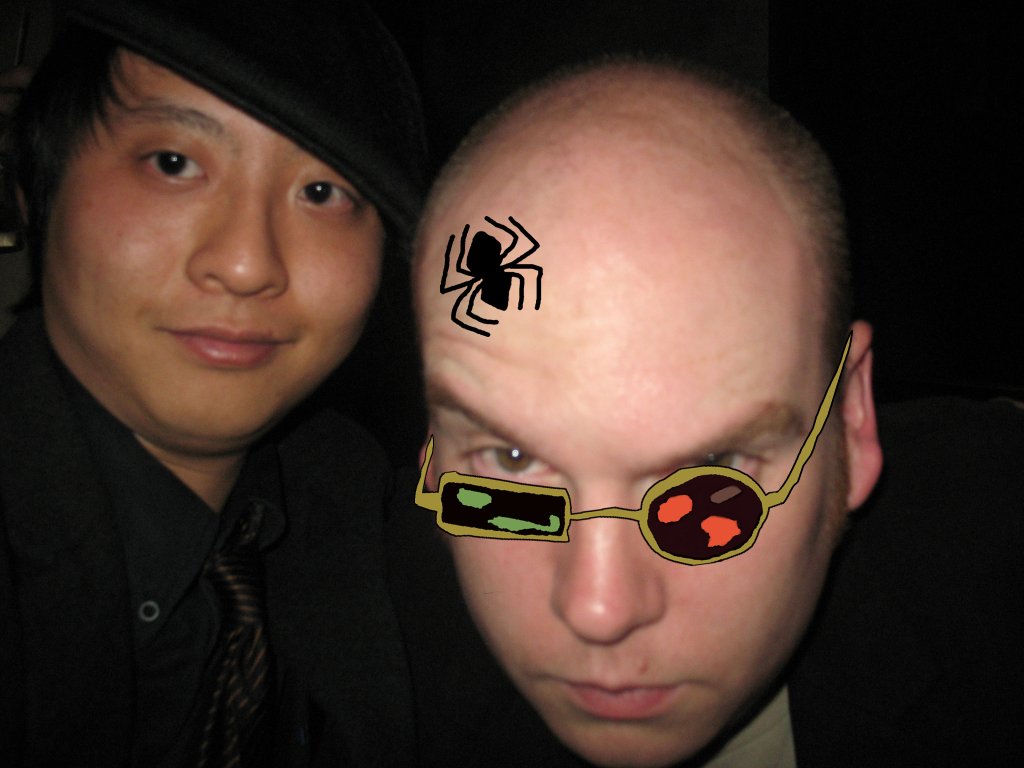
Now I just need some Spider Jerusalem glasses.

Very late last night I was sitting at the computer, trying to decide if anything I had to say on zork.net was worth going another half hour in the red on my sleep deficit for the week, when I hear a loud thud from the bedroom. I jump up and run to the doorway to find my husband sitting calmly in bed reading.
"Did you hear that?"
"What?" he asks, innocently.
"The thud."
"Oh, yeah. Something fell."
"From where?"
"From the bed."
"And you're not planning to get up and see what it was?"
"Must I?" He looks pretty comfortably installed, not at all inclined to get up and investigate. After all, whatever it was clearly hit the ground, so it can't fall any further, right? I, on the other hand, have decided that since he was the one sitting in the room when it happened, it is his duty to fix it.
"Well, when something falls off the bed, I think it's a good idea to at least figure it what it was. But do what you like." I go back to the computer.
A minute later I hear, "Heeeeelp!" from the bedroom, go in and find my husband hoisting the mattress on his shoulders and trying in vain to whack the side post of the headboard back into place. The bed came from Ikea Seattle, a college graduation present from my father over eight years ago. It has since moved from Seattle to Boston and Boston to Paris, taken apart on each occasion and put back together, as best as we could remember without the long-lost instruction booklet. I think its latest adventure, being dismantled completely and shoved in the bathroom while we had wood flooring installed, may have been its Waterloo.
"What do you want me to do?" I ask, quite annoyed. Now I'm sure of losing at least a half an hour of sleep with no journal entry to show for it.
"Get over there and push!" He motions to the other side of the bed. I squeeze in behind the bedstand, prop the mattress on my head, and try to get a purchase on the pine post that's slipped out of place. Two of those little filmsy Ikea-issue dowels look hopelessly misaligned with their holes, with at least two inches of space between them. I push. Nothing moves. He pushes on the other side. I, in my stocking feet, slide a foot back and hit the side of the dresser.
"I can't push!"
"You have to!"
A good twenty minutes of pushing, pulling, swearing and screaming at each other ensues, punctuated by muffled thuds as we manoeuvre the mattress around the room. At one point I'm completely blocked into a corner with the mattress leaning against my back, and I start laughing uncontrollably. Any remaining force I have is drained from me instantly. Comedy becomes tragedy a few minutes later when we knock over a lamp and break the lightbulb.
My husband finally has the bright idea of removing the bed slats before trying to pushing the headboard back together. Genius! At one o'clock in the morning GMT + 2, the whole thing is miraculously back in one piece. We've even profited from the lightbulb incident by finally getting all the dust bunnies (moutons, or sheep, in French) vaccuumed up.
Of course, I have absolutely no confidence that the bed will hold together for more than a couple of months. Ikea furniture has the bad habit of falling apart at the most inopportune moments, as on the morning my husband sat down to breakfast and had the kitchen chair collapse underneath him.
Meanwhile, I can only imagine what all this late night activity sounded like to our neighbors. Though the average Parisian has likely had similar Ikea adventures, I couldn't help but blush thinking about it.
Prise de tete literally means "taking one's head," in the same way one could take a city or a castle. That's the accurate-yet-colorful translation: in everyday English, it means something like boring, frustrating, a waste of time or a pain in the ass. And as one would expect of such a useful, all-purpose term, it has got to be one of the most common phrases in modern French.
Examples:
"Je voulais aller au cinema, mais c'etait trop prise de tete." I wanted to go to the movies, but it was too much of a pain in the ass.
"Qu'est-ce qu'il me prend la tete celui la." What a bore he is, he's wasting my time.
Particularly applicable in many common office situations.
One prime example of "prise de tete" is the French Office Greeting Protocol. It is very important to properly say hello to everyone upon your arrival in the morning. A simple "hello everybody" from across the room or a nod and smile while crossing in the hallway simply won't do. You must go around from desk to desk, shake everyone's hand and say hello to them directly and personally.
You must know in advance if the person in question gets a "bonjour" or the more familiar "ca va." This is a question of hierarchy and familiarity; I can "ca va" my boss, but not his boss. You must also be prepared to say hello to the person with their first name, as in "Bonjour, Philippe," but only if they do so first, and only if you're damn sure you've gotten the name right.
Half of the project managers in my office are named Philippe, so it's a safe fallback name when in doubt.
I tend to freeze and splutter something incomprehensible when someone addresses me out of the blue. I'll suddenly lose their first name, even though I've worked with them daily for over two years. Or I'll get so tripped up on the "bonjour or ca va" question that the name will come out after a long enough pause to make my colleague wonder if I'm suffering from early memory loss.
It isn't something that probably matters much really, but it's yet another example of an everyday script in my life here that I'm always feeling I get just a little bit wrong. On the other hand, I felt that way often enough even back in the US, I'm relieved to at last have the perfect excuse.
Don't mind me, I'm not from around here.
Speaking of prise de tete, I've tried to get the unicode character references to work without success, and I'm reluctant to mark all my text as raw html just to add in a few accented characters. Anyone with more experience or more hours of recent sleep is welcome to help me out.
The motto of the city of Paris is a, to me, nearly unpronouncable Latin phrase that means something like "it is buffeted by the waves without being submerged." That is my literal, half-past-midnight translation from the French I found on the French wikipedia site. I prefer the way my husband translates it, "Et portant, elle flotte." And despite it all, she floats.
Paris is a city, and thus a feminine entity in French. I think that's why I prefer this last translation, which keeps the feminine pronoun, since I often feel I could adopt the motto as my own. Wikipedia also informs me that this motto comes from the Scilicet, the ship represented on the city's seal and symbol of a merchant's guild in the middle ages. The ship is almost unrecognizable as such on the city's modern logo, but it nevertheless has at least a half dozen centuries of history.
As of August 24th, 2006 I have three years of history as a resident of Paris. I don't even live in the city itself so I'm somewhat of a faux parisian, but more on that later. It's been almost eight years since I first visited here, in late 1998. Perhaps I've not much to tell yet.
Et portant, elle flotte. Not a bad place to start.
Although the rest of the dream was pretty lame, at least it had James Earl Jones in a Devo flowerpot hat. Except instead of red the hat was more of a charcoal gray. (You know, for formal occasions.)
Of course, shipping couldn't be easy, now could it. The calculations for the USPS seem pretty simple: you just punch in a weight, and they have some formula for calculating the maximum allowable volume. Hell, it may even be constant.
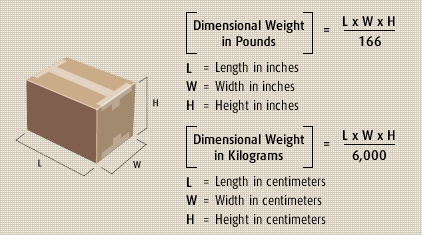
But UPS has formulae that make the tax schedules look elegant. Basically, they calculate a weight that the box is supposed to be, based on volume, and the weight that the box actually is, and choose the higher one. So you get hammered hard on packing materials and double-boxing.
And you know how UPS domestic has like ground shipping where you just pay a minimal amount and let it take forever? Well overseas it's entirely impossible to distinguish one class of service from another. Near as I can tell it's just like random priority froofraw.
And then there's the old "insurance vs. customs" game. If you insure your package for lots of money, customs may make you pay that in full just to let it enter the country, effectively costing you the entire value you insured against loss. Lose-lose!
I'm in a state of total fucking disbelief. I've decided that International Moving Companies are a massive scam. They exist to milk as much from corporate moving reimbursement as possible.
Since flats in London are 90% of the furnished variety, and since none of our appliances are 220 (except our laptops), we're getting rid of furniture and electronics.
So, I've whittled our move down to a few key areas:
- clothing
- books
- crockery/cutlery
- wall-hangings
- paperwork, CDs, and miscellaneous keepsakes
The rest is just noise, and appears in our checked and carry-on luggage.
Now, when I ask people for an in-person moving estimate, they direct me to some stupid web page first. The form on that page usually looks like this:
PLEASE CHECK ALL THAT APPLY:
[ ] BAND SAW [ ] COMMERCIAL DRYER [ ] JUNGLE GYM [ ] FLAGPOLE [ ] DRYCLEANING GEAR [ ] SWING SET [ ] GARAGE DOOR [ ] BED (4-POSTER) [ ] SWIMMING POOL [ ] BRICK (TON) [ ] CHANDELIER [ ] CAMARO + CINDERBLOCKS
So I kind of scratch my head and go "um, none of the above?" and they drop me like a hot rock.
I spoke to a longtime friend who has done the expat thing many times in his life. According to him, oil company stooges are the worst. You'll walk into a merkin's house in Lagos and there will be all the family antiques. He goes to parties in penthouses where dining tables have been hauled from Nebraska and fill all available space in whatever room they're stored. Basically some midwestern housewife is handed an expense form by her husband, told "the movers will be here on Tuesday, so just show them all our stuff" and then sort of by default has them ship anything not nailed down. The moving companies count on this.
These people run 110V heavy appliances like washing machines and refrigerators from foreign power, just using a converter. What, they don't have refrigerators where you're going? Is your dishwasher really that precious to you?
Add to that the fact that moving and shipping companies seem to all be crooked (been looking at http://movingscam.com) and the whole thing just seems so not worth it. At this point I'm ready to just pack it all up myself and ship UPS and USPS.
What a goddamn racket!
So, on the outside walls of the cubes at work we have these little whiteboards for letting people know that we're on vacation or whatever. Most of the time they go unused, so some people have gone to putting inspirational quotes on theirs.
So I decided to put "It's an empty journey to triumph if you don't plant the seeds of catastrophe along the way." That didn't go over too well. I ended up switching to "If you can't beat them, arrange to have them beaten." That one's still up there.
When I first learned to shave, I was still a teenager living with my parents. I learned to shave using the home sink with its seemingly limitless supply of hot water. And my father taught me to just rinse off the razor in the stream of water as needed, to flush out the harvested whiskers.
But based on all the forums and shavegeek photosets and all, it seems that the preferred method is to fill the sink with hot water, and just go from there. The advantage, they say, is that the silence of the still waters will allow you to hear the rasping sound as you work. This promotes keener understanding of the whole process, and results in a finer shave.
The only problem with this is that I used to fill the sink to shave, years ago. I had no choice, until we called the plumber to clear out the pipes. It was really distressing, since I'd leave a ring of hair and soap around the bowl, and I just found the whole process gross. I came to associate "full sink" with "filthy sink".
But since our drain has worked nicely for the past couple years, I decided to give it a try a while back. After all, our dinky energy-saving apartment water heater only has a couple minutes of hot water left once I'm done with my shower.
Boy did I have flashbacks. I spent a good five minutes working to clean the Taylor's Lavender Cream residue off the sink rim, wiping away whiskers with my finger. Hulk SMASH.
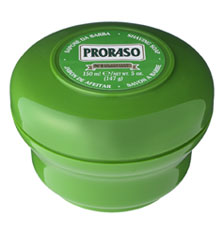
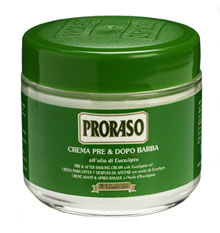
But this morning I decided to give it a go again, this time using the Proraso pre-shave cream instead of the nancy boy pre-shave oil. I lathered up with the Proraso soap on top, and got to work.
Imagine my surprise when all the little globs of hair and cream stayed coherent in the bowl as I shook them off. It didn't last, but the hairs didn't all migrate to the meniscus or cling fast to the sides of the sink. When I was done, all it took was a little splashing with cold water and the whole lot went down the drain, quick as you please.
And despite the double-numbing mentholyptic treatment of both proraso pre-shave AND lather didn't seem to matter. I got a great shave without marks or irritation. I could hear what I was doing, and began judging my shave based on the sounds it made.
Beaujolais!
No, it's true! I saw it in a movie!
And there ain't a gott-damb thing you can do about it!
Don't believe the hype spewed by the Liberal Media! They may sound convincing with their snooty tracts named such as Treatise of Government and Common Sense, but do not believe their Constitutionalist lies! These nefarious trolls have missed one key and essential fact that changes the very equations of our lives, our fortunes, and our sacred honor! The Monarchy will never die!
That's right, folks, I am indeed moving to London. And that means it's time for one last Troncon in San Francisco before I go.
| Su | Mo | Tu | We | Th | Fr | Sa |
|---|---|---|---|---|---|---|
| 1 | 2 | 3 | 4 | 5 | 6 | |
| 7 | 8 | 9 | 10 | 11 | 12 | 13 |
| 14 | 15 | 16 | 17 | 18 | 19 | 20 |
| 21 | 22 | 23 | 24 | 25 | 26 | 27 |
| 28 | 29 | 30 | 31 |
The shindig is set for the first weekend in May. That's May 5, 6, and 7. This has been set in the #tron topic for the past week or two.
This date was chosen because the largest number of #tron-ites were available to come.
One of the reasons that this calling-of-the-tribes occurred is because I will no longer volunteer for the National Park Service past May. Come June, I'll be all wrapped up in the move to London, and won't be able to spend any time on the island. So this is your last chance to get the super secret behind-the-scenes tour of Alcatraz!
As a volunteer with the National Parks Service, I have the keys to take folks into areas that the general public don't have access to. This means that instead of the quick-and-dirty half-hour audio tour of the cellhouse that most of the "it's Thursday so this must be San Francisco" crowd get, you'll receive the full red-carpet historical interpretation of a trained NPS docent.
Allowing for various time constraints, I can take folks into an old US Civil War-era tunnel, the disused A-block area, the hospital, and possibly even the old gun gallery. Bring your cameras, because the photos practically take themselves.
Since I'm doing this as an NPS volunteer, I have to put in a full day's time even if folks show up for a half-day. However, I recognize that some people will not be in town until Saturday morning and can't make the 9:30 ferry. So what we're going to do is a two-staged event.
All Tronconners will need to purchase their own tickets for Saturday, the 6th of May, 2006. The full-day crowd will buy tickets for the 10:45 ferry, which will likely be met by me on the island dock. The rest of you will catch the 12:15 ferry at the latest, and will join the party already in progress.
The link to purchase tickets for the correct date is: https://www.pier41.com/availability/SALZ/EALZ2006734
Alas, the Blue and Gold fleet's on-line ticket system only sells tickets with the audio tour price included. If you want to purchase a slightly cheaper ferry ticket that does not include the audio tour rental fee, you will need to call their ticket office on the telephone. The number for that is (415)705-5555.
If you are going to be on the 12:15 boat, it is your responsibility to find contact information for someone from the 10:45 group. There are payphones outside the dock restroom building, and the island has its own mobile telephone repeater. Barring that, the ranger or volunteer staffing the dock will have a radio that can reach me. Just tell them that you're trying to meet up with "an NPS Volunteer named Nick". If you find yourself woefully tardy, they'll probably send you up to the top of the hill to meet us outside the cellhouse.
Once again: Purchase a 10:45 or 12:15 ferry ticket for May 6th, as fits your schedule.
Once you have purchased your ticket, let me know which ferry you will be on.
The site's official rules are simple:
Now, unofficially, I have a few reminders for you. The entire island of Alcatraz is a National Park. That means it's owned by the National Park Service, which is under the Department of the Interior. It is Federal land. The Law Enforcement Rangers and Park Police may look like rent-a-cops in RCMP hats to you, but once they catch you in the wrong you'll be stuck in the federal court system (and probably so will I).
So please, leave all the counterculture contraband in San Francisco or Oakland, where the local constabulary have a history of being more accomodating to that sort of thing. If I were you, I'd even leave the booze at home.
This is an important point. Since food and drink are only allowed on the dock, you'll want to consider two options for your lunch situation:
If you're looking for places to pick up food quickly on the way to the island, I recommend the Boudin bakery by Pier 43 (across a parking lot or two from Pier 41). But they do sell factory lunchoids on the ferry (pizzas, stadium nachos with pasticine cheese-product, pretzels, etc) if you're tight for time.
Pier 41 shares a Muni stop with the tourist trap Pier 39. The most pleasant way to get there is to take the F line streetcar. The F line runs down Market Street, and thus intersects BART and Muni Metro stations neatly. Plan on a charming ride of at least half an hour, and also plan to show up 15 minutes before your scheduled ferry departure so that you can find the place and line up.
If you miss a ferry, the standby line is an unpleasant experience, and you'll need to call someone in the group to let us know you'll be late by a ferry or two.
If you're coming in on Saturday morning, bear in mind that San Francisco International Airport isn't even in San Francisco County. It's out in Millbrae, and while BART does connect via the International terminal, it will take a while to reach the city proper.
My last bit of advice to you is to ignore anything you think you know about weather in California. San Francisco in the late Spring/early Summer is a schizophrenic cycle of calm sunshine and windy fog. And the weather on Alcatraz is the weather of San Francisco, amplified.
So the wind and fog that glances The City will blast right across The Rock, and the sunshine reflected off the bay has left me with more than one sunburn on the underside of my nose. Dress in layers, so that you can cover up against wind and rain or strip down to your shirtsleeves as the day requires.
I've never had to find a hotel or other short-term lodgings in San Francisco, so I'm afraid I can't be of too much help. Some #tronners may be willing to host guests, but most of those available are likely already booked.
One person, however, has come upon the novel idea of staying at the Fort Mason hostel. I can't speak to the quality of the stay there, but it has the advantage of being just on the other side of Ghirardelli Square from the high-numbered piers. It's an easy downhill walk from Fort Mason to Pier 41 (but leave early), and you have the advantage that it's the site of the local NPS offices. Heck, it's part of the Golden Gate National Recreation Area, just like Alcatraz!
I have of course said this elsewhere, but it bears repeating.
On the 18th of April, 1906, at 5:12AM local time, a colossal earthquake hit California, centered on San Francisco. This is one of those events that defines SF history, and so every year there's a celebration in the early morning.
Of course, since this is 2006, this year's will be enormous. People are making a big to-do about how the hundred-year anniversary is coming. But there's just one problem:
The quake happened in 1906, before Daylight Saving Time. The quake happened at 5:12AM Pacific Standard Time. The revelers this year are celebrating at 5:12AM Pacific Daylight Time. They're an hour early.
If that doesn't convince you, consider that the accounts of the quake always describe the "early dawn light" that illuminated the city when the quake hit. A sunrise calendar I just used lists morning twilight as 6:03AM PDT, and sunrise proper as 6:31AM PDT. The sky is still black at 5:12AM PDT!
Naturally, as with the whole "2000 is still the 20th Century" crowd, all this amounts to is proof that I'm a smartass.
Mike Orr has this cool little howto explaining how to do various HTML markup techniques using reST:
http://sluggo.kicks-ass.org/python/rest/rest_for_html_users.html
It's unfinished, but it's full of useful advice for beginning to think of your plain-text layout as markup instead of trying to do everything with particular tags.
Okay, so I hit the shavegeek forums every couple of months just to see if they've come up with anything interesting beyond "OMFG TEH BURBLE SOAP IS LESS SANDALWOODY THAN THE GURBLE SOAP I H8 U". And a couple weeks ago they were all abuzz about the famed Proraso brand Italian shave soap being carried in Target of all places.
I used to troll Italian import places in North Beach who laughed at me to my face for asking about this stuff: "Oh, you'll never find that around here!" It's an anomaly in shavegeek accoutrements. All the ingredients say wrong wrong wrong: it's mentholated, confabulated, and extracted and yet it is somehow a formula that wins real fans. If you thought the Nancy Boy altoid effect was strong, well Proraso's menthol and eucalyptus is like having the Halls of mentho-lyptus all over your face.
So I wrote to Pedro because there was a big fight on the forums about the US formula. Supposedly the ingredients list for the Target stuff doesn't match the imported stuff. Lots of European shaving cream manufacturers have been reformulating to meet with European Union FDA-type regulations, but we don't really know why they chose to do this. However, the rundown of all those threads is that the one change they made was:
...to ditch Lanolin and replace it with sodium borate.
This was good news, since Uncle Pedro is allergic to lanolin. It probably also makes Proraso a vegan formula, which could be handy for lots of other folks.
So I shaved with Proraso shaving soap a few times, and it really felt as though my face were going tingly-numb. It has a strong medicated feel to it, and I think that I got a little careless as a result. The shave I ended up with was rough and overscraped, and I really couldn't tell how brutally I was working myself over with this anæsthetic stuff on.
Now, it's probably fantastic stuff for the summer. The cooling effect would be such a great thing on a hot day that I'd probably dab the stuff behind my ears and along my neck for relief from the heat. But I think I'll leave my little $4 tub of the shaving soap alone for now.
However, lots of shavegeeks rambled and raved about the pre-shave cream. Some folks groused that it was no better than a "proper prep" (which I assume means seven minutes of hot towels and a deep-tissue massage), but others swore by it. So I figured what the heck and went back to Target to get a jar.
So this morning I put the stuff on under a layer of Taylor's avocado, and did a quick shave with a four-day-old blade that had already been giving me grief. It's possible that I just mixed the lather a little richer than usual, but the shave was flawless. The metholated cooling was more muted than when I used the proraso soap, but I still felt like my face was a little tingly-numb. Still, I emerged baby's arse smooth without so much as a single bump.
I'll definitely try a bottle of Nancy Boy pre-shave oil to compare, but I think this category of goo may be the next big thing for me in blowing petty cash on vanity grooming products.
Someone in one of the shavegeek forums discovered an archive of advertisements on the Web, and pointed out the collection of shaving product ads.
They cover both world wars, and it seems interesting that in the earlier images they seem to really be hawking shaving sticks. In one of the earliest entries, however, The Conversion of Mister Prejudice, they show someone applying it to his face and lathering against his chin with his brush. I've never used a stick, but I always thought it was supposed to be brushless.
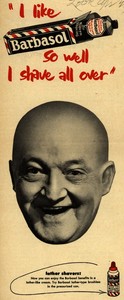
Lots of brushless creams show up in the post-WWII entries, and powders seemed big in the 20s. I have no idea how good any of these shaving products were, but the brands represented really are terrible nowadays. Barbasol is really the industrial foam goo of last resort.
As always, implications of getting laid by being smooth-shaven abound.
And of course, you can't have a collection of old shaving ads without a few Burma Shave rhymes.
Well it looks like Corey Greenberg has revised The Perfect Shave, and is now pushing the Vulfix #2233 as the best all-'rounder.
He's also updated his blog-copy to include the magic that is Nancy Boy shaving cream and rose hip oil and all sorts of other little discoveries that he's written about over the past couple years.
Gary, I read the lock hacking bit, and I was surprised at how simple the method was. It's so obvious once you know it, I'm a bit mad at myself that I never realized this years ago. Converting an m^n problem to an m*n problem simplifies things wonderfully.
Of course, once you come to the hack, the next question is how to prevent that exploit. The main way I can think of is to find a way to tie the pins together so that they will only open when all of the pins are set for master or all set for the lock-specific key. This solution would probably lower the number of possible keys, as well as making the locks more specialized. (One advantage of the susceptable master keys systems is that they can be made from regular single-key systems).
Of course, I'm having trouble finding key blanks which match my dorm keys online, and I don't want to walk into a hardware store comparing random key blanks with a key stamped:
U of M
DUPLICATION
PROHIBITED
Well, I went through and cleaned up my old entries, using this technique. When I was done, I decided to clean up all the entries that were generating reST errors because reST was freaking out trying to interpret raw HTML. I basically went through and cleaned up all of Nutella's entries and a bunch of Sam's.
For Nutella, he essentially wrote everything as one solid block of HTML, often with no newlines at all. So what I did was wrap most of his entries in reST's raw html directive, like so:
.. raw:: html
<cite>blarblarblar</cite> etc etc <a
href="http://zork.net/motd">a link</a>
The outcome is as you'd expect:
blarblarblar etc etc a linkNutella used <cite> a lot, and decimal unicode entities to print hanzi.
For Sam, he had written most of his entries in the wiki markup, using only occasional HTML for URLs and <pre> blocks and so on. I wrapped a few individual paragraphs in the .. raw:: html bit, but mostly I just fixed his bad entries to be properly reSTy.
The switch to reST may be preventing some folks from using this, so here's a few basic tips to cut most of the noise from the quickref.
First, pre blocks are handled using a double-colon and some strict indenting:
::
Note that
there is a blank line
between this paragraph
and the ::.
It won't stop being <pre> until we outdent back flush
with the ::!
...becomes...
Note that
there is a blank line
between this paragraph
and the ::.
It won't stop being <pre> until we outdent back flush
with the ::!
Next up is hyperlinks. The finnicky bit about these is that they tend to behave more like footnotes or endnotes. Basically if you end a word (or a string enclosed in backticks) with an underscore, it becomes a link to a URL specified later on (after the paragraph, or at the end of the file, or wherever you like):
The switch to reST may be preventing some folks from using this, so here's a few basic tips to cut most of the noise from the quickref_. .. _quickref: http://docutils.sourceforge.net/docs/user/rst/quickref.html First, `pre blocks`_ are handled using a double-colon and some strict indenting:: [...] .. _pre blocks: http://docutils.sourceforge.net/docs/user/rst/quickref.html#literal-blocks
Then there's images. This is handled with the .. image:: directive, as follows:
.. image:: http://zork.net/laziness/face/squarenick.jpg
:target: http://zork.net/gallery/sanfrancisco
:alt: Nick Moffitt
:align: right
Finally there's Unicode. There are a few ways to do this. For example, in Ubuntu I use SCIM to input UTF8 text in any application, so I can just hit ctrl-space and start banging in 日本語. But some folks don't have that luxury, so here's a few ways to do this:
|nihongo| is |ni| (sun), |hon| (origin), and |go| (language). Thus, |ni| |hon| |go| is "the language of the rising sun". .. |ni| unicode:: 0x65e5 .. |hon| unicode:: 0x672c .. |go| unicode:: 0x8a9e .. |nihongo| unicode:: 0x65e5 0x672c 0x8a9e
日本語 is 日 (sun), 本 (origin), and 語 (language). Thus, 日 本 語 is "the language of the rising sun".
But again, you can always just go back to HTML character entities and wrap a paragraph in .. raw:: html.
The rest is uncommon enough that you can just consult the quickref or look at the .txt file for an entry you see doing what you want. Also, feel free to pop into nwall and ask for help if you're trying to do something advanced with reST.
But most of what you do will just be ordinary plain text paragraphs, separated by blank lines.
Well, maybe if they're mile-long stilts they can.
So one somewhat bothersome aspect of the blosxom system is that if you edit a file, that bumps it up to the top of the listing. This is because pyblosxom sorts all entries by the modification time of the original posting.
There are quite a few old entries in here that could do with a few repairs, but they really don't belong at the top of the page or the RSS feed. So for you folks, I give you the magic of touch!
Here is an example of how to use cp and touch to edit old entries while keeping their posting date the same:
$ cd /var/www/motd/madness/goober/ $ cp -a no-its-true.txt /tmp/old-entry $ vi no-its-true.txt $ touch no-its-true.txt -r /tmp/old-entry
First, the cp -a causes the file in /tmp/ to have the same exact modification time as the oirginal file. We are actually just backing up the modification time here, and don't care about the contents.
Then we edit the file as normal (I use vi, but I know that many folks like nano).
Finally, we use touch -r to make the edited entry have the same modification time as our backup in /tmp/.
So this would be helpful for folks like Nutella, who need to go in and mass-replace a lot of <br> and <p> stuff with ordinary blank lines.
If you edit an old entry, let me know and I'll give the full site build a push. Right now pyblosxom only updates files that have brand new mtimes, so this trick will sneak past that. I can force a full rebuild that will update everything.
The Economist drops a little science on the diminishing returns of multi-blade cartridges:
It is simply not possible to add a new blade whenever the marketing department wants one. Every additional blade, explains Michele Szynal, a spokeswoman at Gillette, adds weight and size to a razor. Firms must therefore find ways of making both razor and blades lighter, which means thinner blades, more closely spaced, made of special materials, with new coatings.
—The Economist, http://economist.com/displaystory.cfm?story_id=5624861

I was Spads in this conversation:
+Spads: well you're going to have to set up NAT anyway
~paganini: Yes
+Spads: so while you're doing that, DHCP is pretty much aftershave
~paganini: Hehe
@Lxndr: what is the point of aftershave, anyway?
+Spads: two things
~paganini: NAT doesn't look too hard though
+Spads: lots of idiot men buy crap like old spice, which is alcohol
supposed to I dunno, disinfect or something
-: paganini does not use aftershave
+Spads: I use witch hazel, which is a skin toner, and feels super fantastic
~paganini: Except sometimes I use a little witch hazel if my razor was dull and I got scraped
@Lxndr: okay, so the point is to be an idiot man?
~paganini: Hehe
@Lxndr: and/or use witch hazel
+Spads: I mean, you've just done a skin peel. it's sensitive. slapping alcohol on is just going to sting and do pretty much nothing for you
Lxndr: well I use an "after shave toner"
alcohol-free aftershave
I use lucky tiger
but I've heard good things about trumper's skin food
I'm actually leaning toward beginning to use pre-shave oil too
especially for when the razor gets a little old
@Lxndr: I've never really even used, like, shaving cream. Nonetheless any of that other fancy-schmancy stuff like aftershave or pre-shave oil.
+Spads: do you use an electric, or just let your beard grow?
@Lxndr: Currently, I use disposable razors.
+Spads: wait
-: paganini uses shaving gel
@Lxndr: I am also lazy, and shave only once a week or so.
+Spads: without shaving cream???
~paganini: Whoah
+Spads: like, dry?
@Lxndr: Yes, without shaving cream.
~paganini: Lx, does your face still have skin?!
+Spads: holy shit
@Lxndr: In the shower, usually, so it's damp.
+Spads: I didn't believe that anyone actually did that
-: paganini tried that once
+Spads: like I thought it was a myth that all these fru-fru "wetshaving" fanatics made up
-: paganini had razor-burn that lookedl ike roadrash
+Spads: the notion that people somehow are shaving without any lube
@Lxndr: well, there is the water.
-: Spads hands Lxndr the Bill Duke Predator Memorial Ghetto-Shaving Award
Well gosh, I guess people really do shave like that. I had no idea!
So we now have the latest 1.3.2 Pyblosxom, which means we have proper RSS now. I've updated the little XML box, but the long and short of it is that you should change "index.rss" to "index.rss20" for your feeds.
http://zork.net/motd/index.rss20 <-- teh new url.
http://zork.net/motd/nick/index.rss20 <-- example user RSS category feed.
Six months ago, I observed the following in #tron:
CrackMonkey: http://www.kk.org/cooltools/archives/000979.php <-- oh dear, I may personally be suckered in by this one...
sneakums: man, count me in
CrackMonkey: It has all the elements necessary
a strong technical argument, economics, a certain historical chic, and the aura of self-confident masculinity without all that messy bravado
For the next week, I did all the usual Internet research you'd expect before going off into some goofy "lifestyle" craze. I read Corey Greenberg's The Perfect Shave (which is still required reading, even though Corey has moved on a little since then), trolled through the Shavegeek Forums, and spent hours comparing products on Classic Shaving. I made some rather nice purchases based on that.
However, I've learned a little since then, and that's the main reason why I'm posting this here: so far Sneakums, Octal, and Uncle Pedro have all joined in the fun with old-timey shaving gear, and more seem to be following. Last Autumn, I'd have just thrown those three links at them and let them read up on it like I did, but now I'd like to explain what I'd do if I were getting into this today.
So first of all, just to avoid any confusion on this matter, this is not about straight razors. The trade nickname for those is "cutthroats", and I'm with Corey Greenberg when I say that they're just a step too far for me. What I'm babbling about is what people used to think of when you said "safety razor" before disposables and expensive cartridge-head monstrosities reached the ridiculous point in history when they said "Fuck everything, we're doing five blades!" (yeah, that used to be a joke. I know.)
So instead of a wicked blade like this one:

I am talking about something more civilized like this:
The razor is a dual-edged safety razor, and you load it by unscrewing the bottom, lifting up the curved hammerhead portion, and sliding a dual-edged version of a surgical razor blade onto the spindles inside. Sweeny Todd, go home!
Why isn't it better to have five vibrating blades in a single head like Gilette says? Well, there are a number of reasons most people cite, such as the cheap factory production of the multi-blade cartridges, or the tiny gaps between blades clogging with hair and dead skin. But in general the multi-blade razors are trying to emulate someone doing multiple strokes with a single-bladed razor. The results are mixed.
The one thing that takes people by surprise is how short the handle is. It's about half the length of a disposable razor's handle, and you hold it with only your fingertips. I find that it gives me much better control, although you can buy long-handled DEs.
The particularly astute among you will notice that my razor is sitting next to a rather large brush that boasts the absurd-sounding category of Super Badger. Wind in the Willows it's not.
The brush is due to the fact that I ditched cheap aerosol cans full of shaving gel or foam in favor of luxury imported creams. And you know what? The import creams are cheaper and last longer and are so much more enjoyable than the pressurized gel I used to use. They're two parts shaving lubricant and one part skin care product.
Take a look at the jar on the left:
That's the Taylor of Old Bond Street Avocado shaving cream. It's a widely-respected favorite due to its heavy use of avocado oil, which lubricates and moisturizes.
Many of the articles on "wetshaving", as the fad calls itself (what, were people really shaving dry before?) act as though the reader is a complete n00b who never learned how to shave at all. To hear Corey Greenberg and the Shavegeeks tell it, millions of men are grabbing cheap disposable razors and just mowing into their cheeks without even bothering to head to a sink or anything.
When I saw Predator for the first time, and Bill Duke pushed that blade until he bled, it was the only part of the movie that scared me. But I guess I must be in the minority, because I actually had my dad stand me by the sink and teach me to shave using a dual-bladed razor sample that was automatically sent to me around my 16th birthday (suspicious, but my mother never cared much for privacy, and signed all of us up for who knows how many sucker mailing lists).
So I learned to wet my face and work with the grain before going against it. I also had my first shave in the chair of our family barber, his expert hand scraping the weeds and peach fuzz off with a deadly cutthroat. All the same, I retreated out of fear to an electric device (derisively referred to by the fanboy shavegeeks as a "lawnmower") for many years. The acne only cleared up when I finally went back to a blade.
So there's a simple set of steps I go through to shave now, which is really all there is to the goofy term "wetshaving". Corey Greenberg acts as though it's a radical departure from the norm, although I think it's basically the same way I shaved with a Mach 3 and gel.
Now the shavegeeks shout loud and clear OMFG DO NOT APPLY ANY PRESSURE WHEN SHAVING. Of course I apply pressure when I'm shaving, but I sure don't shovel away like Duke up there. The way folks like Corey Greenberg make it sound, everyone's just spraying gel onto a dry chin and then pushing against their face like they're pressing air bubbles out of wallpaper.
The one thing I will say is that if you do go against the grain, that's when you have to barely tickle the surface with a feather-touch.
So you've seen the photos, and this is what I have, for better or worse. My first order was from Classic Shaving, and consisted of:
Since then I've picked up the following from various local shops:
I've been fortunate in that there's even a cigar shop on Market that carries Merkur shaving supplies without egregious markup. Nancy Boy is a local company, and folks pay good money to have their stuff shipped all over the continent (and their laundry detergent is the best I've ever used!). Most Target stores now carry Proraso in their "Spa" section, and I grabbed Lucky Tiger at Elephant Pharmacy and I've seen it at Whole Foods.
Now, let's look over my original Classic Shaving order. The Merkur HD (or "hefty") is a classic, and one that shavegeeks seem to return to time and again. I like that the extra weight gives it some mass, so shaky fingers aren't a problem. When Uncle Pedro ordered, they were out of all the hefty Merkurs except the open-comb version, so that's what he uses. The open comb seems to be good for thicker hair, although it tends to shave a little closer, I'm told. That might make it not quite ideal as a "my first DE razor", but it's still a fine instrument.
The Taylor's Avocado is good stuff, although I think I'd go with rose rather than lavender for my second tub next time. The blades are something I haven't experimented with, and I'm still using the Merkur Platinums.
But the brush is something where I feel like I'd make a different choice today. The shavegeeks are all about huge enormous brushes that carry six faceloads of lather in a single dab, but they've taken it to excess. The 2235 is the model that appears in The Perfect Shave, but Corey Greenberg himself recently said that the 2234 is his favorite overall brush: it's $10 cheaper, and a little bit smaller and easier to manage.
I do feel a little out of control with my big sloppy brush from time to time, but Corey has gone on to the Wee Scot mini-brush now. He's basically using little travel brushes to lather these days, so who knows what that's all about.
Of course, I'm not about to buy another brush. Buying a brush made of badger hair kind of went against my vegetarian sensibilities as it is, so I'm not going to waste what I have. Also, the brush was half the cost of my initial purchase to begin with. My reasoning was that the razor and the blades were such a small portion of the order that if I decided that shaving with a DE was too rich for my blood, I'd still have a classy brush and creams for use with a pedestrian Mach-3.
I will say that the larger brush does hold a good deal of warm water, and it's great to get that first pass of warm lather on the cheek.
The Nancy Boy is another big favorite, and I loved being able to just walk into the Hayes St. store and pick up a jar (oh yes, and do try their laundry detergent!). They're a super friendly company that seems to know how to win repeat business. I'm not sure the shaving cream is as good as the Taylor's Avocado, but it's not really in the same category.
Uncle Pedro described the NB cream as "like an altoid for my face" due to the mix of lavender, peppermint, and rosemary oils in the formulation. His only comparison was Taylor's lemon/lime, which left him nonplussed.
But speaking of altoid-on-the-face, I finally managed to grab a tub of Proraso shaving soap. It's another one of the brands mentioned in The Perfect Shave, and it's got menthol and eucalyptus to make a crazy chilly numbing tingling sensation like medicated shaving cream. I'm not sure it's the best thing for a chilly winter morning, but I mean to give it a chance. It's probably wonderful on a hot day.
But the best part is that with a good brush, just about any decent hard soap can make shaving lather in a pinch! In fact, a good chunk of olive oil soap is one of the more popular hard shaving soaps, and you can use it to wash your hands or feet or use it in the shower or whatever you want when you're not shaving with it. This gives me a sort of rugged self-reliant confidence, like I could McGyver up a shaving setup in the field if I had my brush on me.
Finally, I bought Lucky Tiger aftershave strictly because Tom Waits sang about it. I know he was singing about hair products made by the old company, and I bought 1990s-inspired nuts-and-berries New Organics stuff, but that suits me fine. I get pure aloe and orange extracts and chamomile and witch hazel and all that good stuff, and in a classy looking retro bottle made to look like the old brown glass pharmacy vials. It works a champ, too.
Okay, so after all this, you're squirming in your seat, adjusting and readjusting your ironic horn-rimmed glasses, crying out "Oh, but now I simply must get in on this hip new retro craze! Tell us what to buy!" Your consumer obedience circuits are shorting out! Just sit back, take a stress pill, and think things over.
If I were to place an order from Classic Shaving for someone new to this, here's what I'd get:
Uncle Pedro ordered a set like this, only with an open-comb HD and Lemon-Lime Taylor's instead of avocado. I basically told him that the citrus creams tend to be made for oily skin, and the avocado is best for dry. Well ol' Pedro slapped the dust from his rough-cut hands, and gesturing with his John Henry mallet he proudly informed me that he had "combination skin". And we left it that way as men, true to our word.
So I sent him a travel jar of Nancy Boy Shaving Cream, prompting his gushing "altoid" comment. The Nancy Boy is made with Avocado oil, although it's not the all-hallowed balm that Taylor's is. Still, it's a fantastic all-around shaving cream, and you could do so much worse and still be in the top shelf.
Aha, you say, but you are in San Francisco! You demand instant gratification! You don't want to wait around for some Angeleno importer to ship you your gear via UPS GroundSloth! You want to pound the pavement and return home with bags full of gear!
I am powerless to resist your consumer gusto! Demand no further!
I have no idea how you intend to comparison shop on brushes, so you'll just have to comparison shop a bit in person. But the rest of the gear is available within easy walk of BART stations.
Grant's Tobacconists carries merkur razors, unlabeled and uncategorized. The shopkeeper is an old Boer who knows two things about the stock: Diddly and Squat, and Bo Dilddley's tour left San Francisco months ago. I occasionally go in to buy another box of blades (mostly because I can, since it took me six months to make it through the first box) I ask to see the Merkur Platinum Blades and he always responds "Uh, I think they're all made of steel." They've got mugs and brushes and other things, but I think they only have boarbristle instead of badger.
They're by the Montgomery Street Station, North exit, across from Stacey's independent bookstore and next door to Patrick & Company stationers.
Nancy Boy moved out of their Castro digs and into a cute little shop in Hayes Valley. Stop by and pick up a jar of the Nancy Boy Shaving Cream and a tub of the laundry detergent. If you sign up for their mailing list, they give you a discount right then and there.
But generally stay away from the haberdashers and "gentlemen's clothiers" you'll find downtown. Most of those guys sell the imported English creams like Taylor's, but at stratospheric markup.
Oh, and if you live in London, just go to Taylor itself!
After spending a good amount of time in the SAIS source code and getting a feel for the game logic, I sent a long mail to a collaborator with my dream goals for the system. I listed a bunch of things, but my real pie-in-the-sky items were these:
After poking around through lua some, I chanced to take another stroll through the pygame docs. I had not remembered how high-level pygame is compared to using libsdl in C! Pygame has all sorts of great rect methods and sprite groups and other great features that make it a real win. So now I'm taking up the fool's errand of the second system.
I've got access to the SAIS code, so I've been trolling through it to figure out some of the math behind the game object interactions. The camera math is some of the clever stuff, and I am thinking of making heavy use of pygame's rect magic to make that happen.
And then I'll make the game AI, situations, ship definitions, and so on out of modder-supplied python code. I'll have my own default set based on SAIS, but it should be fun.
But for now I'm working on making the simple tactical system work as a hollow demo, with space-object-motion and sweeping camerawork. Once that works in a generalized manner (so that you can raise and lower HUD elements once that's coded) I'll start making a game of it.
I've got a short list of goofy projects that always seem to come up at times when I'm feeling nostalgic or hoping to tackle a relatively uncomplicated programming feat to keep my skills up. I always consider writing interactive fiction in my new favorite language, or maybe a BBS, or perhaps that TradeWars clone I've been meaning to try.
I mumbled about TradeWars in IRC one day, and someone mentioned Diceland. It's a game where you fold these paper octahedra, and the side that's facing has certain power qualities. You move by pressing down on green corner dots (causing you to roll over one edge, allowing you to "walk" across the field) and damage is represented by a red dot that always takes you to a less powerful face.
On the web site and paper game box, they tout this PC game called Strange Adventures in Infinite Space. Last night as I was leaving the ragout to simmer and waiting for E to come home, I decided to head over to the Web site and drool over screenshots.
So I had a look around and figured it would be another era before Free Software had a good critical mass of indie game developers to make shiny little cult hits like this. But I noticed that they claimed to have a Palm Pilot version or something, so I kept poking around on the site to see just how cross-platform it really was. Then I hit jackpot.
They released the source code to the game engine under the GPL about a month ago, in order to open the doors to the modding community that had sprung up around this game. In addition to this, the authors had ripped out all the DirectX code and replaced it with SDL, making Linux ports super easy.
So I quickly pasted this into IRC and set to downloading. After an hour of ripping out Windowsisms (namely, replacing all the directory-walking code, and then spending an hour in the debugger before realizing that an image wasn't being loaded because the coder expected a case-insensitive filesystem) I had a running demo! It was slow, so this morning I had a look at how the developers had done the main SDL loop, and realized that the double-buffering was miscoded. It's a little faster now, but still not exactly where I'd like it.
You can see my darcs repository at http://zork.net/~nick/sais/ and you can always just darcs get http://zork.net/~nick/sais/ and join in with me. I've put in a proper makefile, and I plan to fix the performance bottlenecks visible in http://zork.net/~nick/sais/gprof.txt . The big problem is that the developers hand-wrote their own sprite libraries and just treated DirectX as a dumb buffer to blit pixel data to. There is a lot of room to replace their code with ordinary SDL functions, and their sprites with SDL_Surfaces.
In addition to this, I'd love to see if I can get the modders to contribute some GPL-friendly artwork, and maybe I'll hit the creative commons sites to find replacement sound samples. I'd love to get Uncle Pedro to do some pencil-squiggle animations so that we can finally do the Bread & Cheese game.
For now, though, you will still need to download the Source Code and Demo zipfile to get the graphics, sound, and game data. Be sure to check out the modders' forum thread on the source code release.
Today just gets better and better. Not only did I hear that my old apartment management agency has agreed to part withy my security deposit (!) but I just found out that tomorrow they'll be showing my favourite holiday film, The Ref.
[Back again to finish up after a net hiccup]
I don't recall "mumbling" but Woohoo for reST! I will soon stop polluting the airwaves with HTML. Thanks, Nick, for reducing the LRV content on Laziness to a managable level. I assume that there is a sooper seekrit LRV-only RSS consolidator hidden somewhere (underground). I also need to treat you guys to cre^pes and/or tea and/or Guinness and/or just a good time at some point in the near future.
I just re-read the previous note I posted here and am amused by how much I had wound myself up before my trip back to IL. As it turned out (as it always does) all those worries were groundless. While things didn't go perfectly to plan (e.g. they cancelled my early morning flight from SFO and merged us with the next) it all worked out just fine. I made it in time on Friday to meet the gang in the bar, both to welcome me back and also to say goodbye to one of my ex-associates who had just finished his last day at the old place and was about to follow in my footsteps (or wheel ruts) over to here (now dubbed "The Promised Land"). The IL apartment agency decided not to make a fuss over my leaving (but whether or not I'll see my deposit again is another matter...) and they were fine about my staying in my old place for a few days. I found that they had completely redecorated the apartment in my absence. As well as fixing some long-standing problems they had upped the level of finish so that it looked a good deal better than when I first moved in. It was a little bizarre sleeping on an air mattress under a camping blanket and my coat but that helped give me complete closure on leaving the place. It definitely isn't mine any more. Closing the electricity, gas, phone and bank account went off okay and I had time for Saturday dinner with a friend/ex-colleague and her family followed by Sunday brunch with another friend/ex-colleague and his family unit (they'll also be leaving for The Promised Land early in 2006). On the Monday I snuck back into Ye Olde Salte Mine to meet with my co-authors to work on our current opus. I dodged all in my old department while I was there. IL decided to treat me to the full range of weather - warm and sunny when I first arrived, cool grey and overcast on the Sunday and raining on the Monday. It was good to see the autumnal colours, although the trees outside the window of my new office are changing so I am getting a hint of seasons.
Work at the new place is going very well and I am being eased into my new post. After experiencing first-hand how badly new management can affect a group of people I have no intention of barging in and throwing my weight around. Just to emphasise that point I had two calls from people back in the old department telling me about the latest shenanigans there. Both people were very depressed and one will probably leave. Part of this was triggered by the departure of another of our colleagues. He handed in his notice which apparently infuriated the manager who blew up, called HR and had him escorted from the premises with no opportunity to work notice. The rest of the department were then threatened with the same treatment. People in other departments are horrified about what is going on. The amazing thing is that the new manager has all of the company's senior management completely fooled and is heaping the blame on us who have left. I'm worried about what will happen to all of my friends. On the positive side I have even more confidence in my new company as they are losing a significant rival as they cripple themselves with all of this self-destructive behaviour.
I noticed nutella mumbling about the ability to check the output of his entries. I only just realized that he was actually entering everything in HTML, and ignoring the actual plain-text formatting that motd uses. Even his entries that were just blank unadorned paragraphs were separated with <p> tags instead of blank lines.
Well I've now switched laziness away from the old "genericwiki" formatter, and over to reST. This means that shoving HTML code inline will no longer work, and you'll have to learn reST layout in order to punch in unicode entities or make non-trivial links. The end result, however, will be to banish those hideous less-than/greater-than symbols from everyone's posts.
But the bonus is that you can always test by running rest2html on an entry and checking your result in a browser.
You know, I saw in a movie how people on stilts can run 45 miles per hour.
Hey, Sammy. You sure it weren't cartoons you was watchin'?